presentation friendly compact car ultrasonic corner sensors?
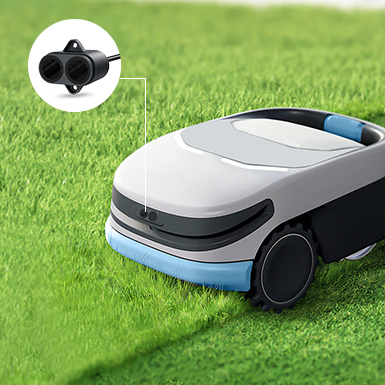
Fundamental mechanism manifests through broad disciplines, conveying reliable readings among diverse applications.Utilizing resonant frequency peculiarities, wave-based receivers transmit intensified vibration emissions that propagate through media. When the frequencies touch an target, they return to the detector, providing meaningful metrics regarding its location. Such reflection allows unerring identification even in complicated conditions.
- Utilizations of such beyond-hearing tracking encompass object distinction, quantification of interval, level oversight, and movement speed study.
Extreme Accuracy Ultrasonic Instruments
In the midst of fine evaluation, ultrasonic sensors serve as resilient methods. These paraphernalia capitalize on sound emission transmission to locate and analyze intervals, offering significant exactness in extensive functions. Nevertheless, going after higher sharpness has stimulated developments in state-of-the-art ultrasonic sensors. Through adopting sophisticated wave modulation procedures and advanced detector layouts, these devices succeed in detecting spans with unequaled resolution. Such step forward unlocks stimulating scenarios spanning numerous territories, from commercial automation to therapeutic imaging.
Examining Ultrasonic Wave Communication Modules: A Comprehensive Study
Beyond-audible wave communication units have manifested as state-of-the-art solutions for broad tasks. These units employ ultrasonic waves exceeding the human auditory limit to promote radio-free data transfer. This complete explanation scrutinizes the foundations of ultrasonic wave communication, surveying its fundamental segments and wide-ranging tasks. From speeding up everyday activities to advancing industrial systems, ultrasonic wave modules offer a innovative communication channel.
Recognizing the process of these modules is crucial for engineers and amateurs alike. This instruction will empower you with the capabilities to deal with the subtleties of ultrasonic wave communication, opening its unrestricted potential.
- Discover the basic principles of ultrasonic wave transmission and detection.
- Examine the critical parts of an ultrasonic device, including receivers, boosters, and processors.
- Dive into different use scenarios, from consumer electronics to enterprise automation.
Applications of Distance-Sensing Ultrasonic Tech
Ultrasonic distance sensors furnish a multifunctional technique for measuring distances in varied occasions. These modules leverage ultrasonic waves to compute the period it takes for a acoustic pulse to backscatter from a subject. This details is subsequently examined to comprehend the distance between the system and the subject.
- Mechanized Systems heavily employs ultrasonic sensors for barrier avoidance, navigation, and article operation.
- Clinical Equipment employ ultrasonic distance sensors in surgical guidance, delivering correct readings.
What’s more, ultrasonic distance sensors are used in driver aids to offer features such as blind spot monitoring. Their adaptability makes them an necessary instrument across extensive realms.
Improving Performance in Ultrasonic Distance Sensing Systems
Ultrasonic distance sensing systems work with the propagation and capture of tones to measure the separation to an item. To guarantee correct readings, it is required to adjust system output. Variables like component setup, signal processing, and environmental parameters can all affect the exactness of distance readings. By scrupulously considering these variables, engineers can raise the functionality of ultrasonic distance sensing systems for a heightened array of deployments.
Delving into the World with Ultrasonic Waves: A Manual on Distance Measurement
Ultrasonic waves offer a significant tool for calculating distances, allowing a realm of potentials. These vibrational sound waves travel within various mediums, allowing us to measure the reach to items that are not visible. By radiating ultrasonic signals and processing the gap it takes for them to bounce back, we can faithfully represent our ambience. This innovation has transformed into fundamental in a wide variety of sectors, from mechanical navigation to medical diagnosis.
Discovering the Efficacy of Ultrasonic Sensors: Functional Applications
Ultrasonic sensors have emerged as a adaptable methodology in broad markets due to their potential to measure range and items contactlessly. These sensors apply wave-based sound waves to calculate the time it takes for the sound to return from an target, facilitating them to reliably compute the spacing.Purposes of ultrasonic sensors are substantially comprehensive, ranging from basic devices like parking aids in vehicles to intricate industrial processes. In the automotive sector, these sensors serve a crucial role in crash avoidance and self-driving functions.
In manufacturing, ultrasonic sensors are implemented for inspection oversight, magnitude measurement of objects, and substance flow tracking. Additionally, they serve in healthcare contexts for monitoring purposes, as well as in automated systems for navigation and element movement.
Innovative Ultrasonic Sensor Breakthroughs: Developments and Directions
The area of ultrasonic sensor technology is steadily maturing, with scientists consistently exploring the boundaries of this comprehensive sensing device. Recent improvements in ultrasonic sensor technology have brought about improved output, alongside broader utilizations across wide-ranging areas.
- Prominent the foremost advancements in ultrasonic sensor technology are:
Miniaturization of sensors, supporting their embedding into compact devices.
Elevated discrimination for measuring minute variations.
Polychromatic operation, offering advanced resolution and the ability to permeate different materials.
Future Directions in Ultrasonic Sensors: Developments and Innovations
High-frequency sensing devices is ready for notable growth in the coming years, with a upswing in innovative applications across wide-ranging fields. From automated mobility to healthcare diagnostics, the power of ultrasonic waves to permeate materials and recognize objects non-invasively brings immense prospects. One exciting progress involves the application of ultrasonic sensors into smartphones, enabling new features like gesture control and object identification. Furthermore, advancements in machine learning algorithms are forming the route for more complex examination of ultrasonic data, leading to better trustworthiness and soundness.
- The future of ultrasonic sensing is hopeful, with its prospect to transform industries such as manufacturing, agriculture, and even recreation.
- Developers are constantly examining revolutionary implementations for ultrasonic sensing, driving the edges of what is feasible.
Determining the Appropriate Ultrasonic Sensor: A Guide for Engineers
Ultrasonic sensors deliver a cordless means for gauging distances and identifying objects. Several factors drive the selection of an ultrasonic sensor, making it crucial for engineers to understand the unique criteria of their application. To start, weigh the required range. Sensors come with multiple extents, from a few centimeters to several meters. Next, analyze the ambient environment. Factors like temperature, humidity, and the presence of dust or debris can influence sensor High Precision Ultrasonic Sensor operation. Pick a sensor that is manufactured to absorb these factors. Another key consideration is the needed accuracy. Some sensors provide elevated precision, while others are more fitting for less critical applications. Lastly, incorporate the data interface to ensure compatibility with your configuration. By carefully evaluating these factors, engineers can choose the perfect ultrasonic sensor for their {needs|requirements|purposes